Most Families Lose Wealth By The Third Generation. Here’s Why.
Generational wealth is not only about money. It is about stewardship, structure, continuity and creating opportunities for your children’s children. Strong families build strong systems that preserve stability, resilience and opportunity across generations.


One of the greatest tragedies in Africa is not the lack of talent, intelligence or opportunity.
It is the lack of continuity.
Too many families work for decades only for wealth, businesses, land, opportunities and knowledge to disappear within one or two generations.
That cycle has repeated itself across Africa for far too long.
I am deeply passionate about helping African founders, families and business owners build true generational wealth because strong families build stronger societies.
When families build continuity:
- poverty declines
- dependency declines
- opportunity expands
- stability grows
- future generations begin from stronger foundations
Generational wealth is not only about money.
It is about dignity, stewardship, responsibility and creating opportunities for your children’s children.
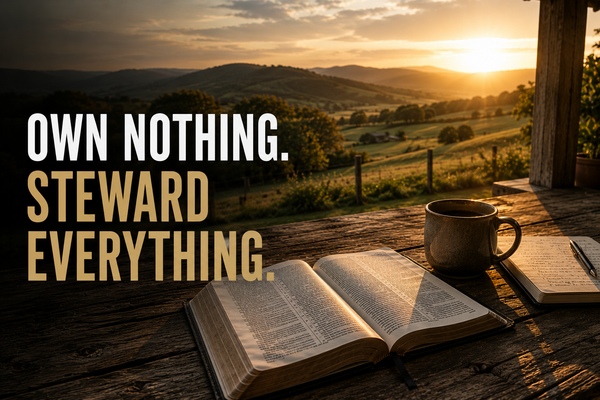
Scripture speaks clearly about this principle:
“A good man leaves an inheritance to his children’s children.”
— Proverbs 13:22
That inheritance is not only financial.
It includes:
- wisdom
- values
- systems
- discipline
- stewardship
- education
- opportunity
- productive foundations
Everything becomes possible when people understand:
- why they are building
- how wealth is preserved
- what structures create continuity
Without structure, wealth often disappears.
Without stewardship, prosperity rarely survives generations.
Many families focus heavily on building wealth.
Far fewer focus on preserving it.
Real generational wealth usually follows a very different process.
- Create productive income first
Wealth rarely begins with investing alone.
It usually begins with:
- businesses
- ownership
- productive assets
- valuable skills
- recurring cash flow
Long-term wealth is normally built on productive capacity before investment growth.
- Spend below your growth level
Many people increase lifestyle faster than assets.
That weakens long-term compounding.
Financial resilience often comes from maintaining discipline even as income rises.
The gap between what you earn and what you consume matters enormously over time.
- Buy assets, not status
Many purchases create temporary appearance but long-term financial drag.
Productive assets create future income and stronger balance sheets.
Focus increasingly on:
- equity ownership
- businesses
- property
- productive investments
- income-generating assets
Assets that compound matter more than status that fades.
- Structure wealth properly
This is one of the most overlooked areas of long-term wealth preservation.
Building wealth and preserving wealth require different systems.
As wealth grows, structure becomes increasingly important.
A common long-term structure often includes:
• Family Trust
A family trust can help protect assets across generations while supporting continuity and succession planning.
It creates a framework for long-term stewardship rather than fragmented personal ownership.
• Holding Company
A holding company is often used to centralise investments, equity stakes, property holdings and long-term assets.
This improves oversight, capital allocation and long-term asset management.
• Family Office Company
A family office structure can help coordinate:
- governance
- reporting
- administration
- investment oversight
- strategic planning
- multi-generational continuity
As families grow, complexity usually grows with them.
Strong operational systems become increasingly important over time.
Proper structures help create:
- continuity
- governance
- resilience
- protection
- operational clarity
- long-term stewardship
Without structure, wealth often becomes fragmented across generations.
- Protect what you build
Many families spend decades building wealth but very little time protecting it.
This is where:
- wills
- trusts
- insurance
- shareholder agreements
- succession planning
- legal structures
become critically important.
Unprotected wealth can disappear much faster than it was created.
- Teach the next generation early
Financial stewardship should begin long before inheritance discussions.
Children should gradually learn:
- responsibility
- discipline
- stewardship
- delayed gratification
- financial literacy
- decision-making
Wealth transferred without preparation often becomes unstable.
- Avoid destructive debt
Debt used for consumption weakens long-term resilience.
Debt used carefully for productive purposes can help expand ownership and productive capacity.
The distinction matters enormously.
- Think in decades, not months
Generational wealth is usually built slowly.
Compounding rewards patience, consistency and long-term thinking far more than urgency.
- Build systems, not dependence
If everything depends entirely on one individual, continuity becomes fragile.
Strong families build structures capable of surviving leadership transitions across generations.
- Preserve values alongside wealth
Many families lose wealth when character deteriorates faster than assets grow.
Money alone rarely creates continuity.
Strong stewardship often does.
The real purpose of generational wealth is not simply luxury.
It is the ability to preserve:
- stability
- opportunity
- resilience
- continuity
- freedom
for future generations.
Strong wealth is rarely accidental.
It is usually structured deliberately over long periods of time.
For families, founders and business owners seeking guidance around long-term wealth structuring, stewardship and continuity:
Email us: info@legacytimes.news
Know a founder, investor, or builder who needs to read this?
Forward it. One share builds one legacy.
Related essays:
Don't transfer your wealth, if you haven't transferred your values.